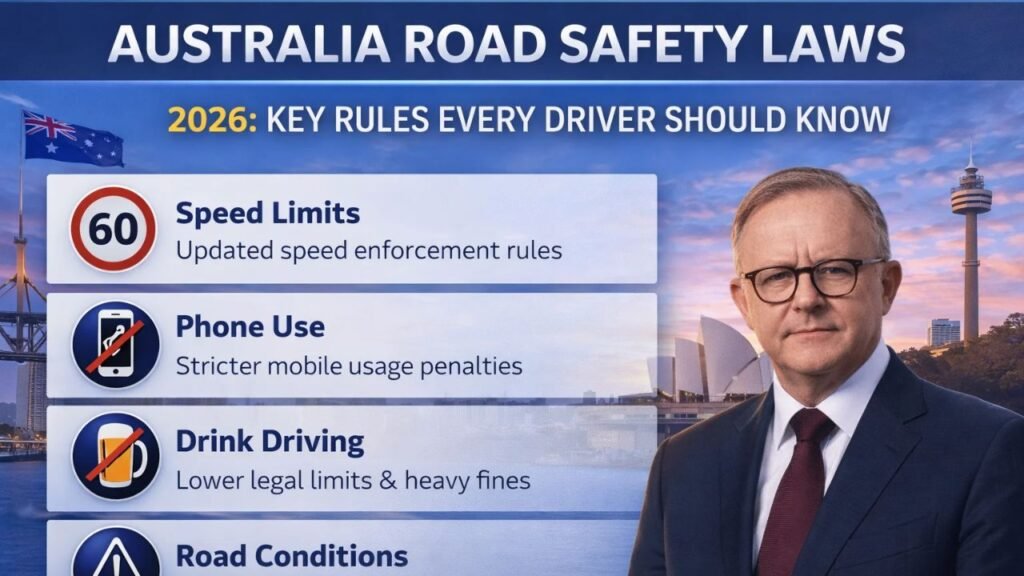
Road safety continues to evolve as technology advances and traffic volumes increase. In 2026, Australia is strengthening its road regulations with updated safety rules designed to reduce accidents, improve driver responsibility, and protect vulnerable road users. The Australia Road Safety Laws 2026 reflect a modern approach to traffic management, combining stricter enforcement with advanced monitoring systems.
For drivers, staying informed about these changes is essential. Understanding the latest rules not only helps avoid penalties but also contributes to safer roads for families, pedestrians, cyclists, and fellow motorists.
Understanding the Purpose of Australia Road Safety Laws 2026

Road safety laws are updated regularly to address changing driving habits and emerging risks. The 2026 regulations focus on improving safety outcomes through stricter compliance and smarter enforcement methods.
Three Core Goals Behind the 2026 Updates
The updated road safety framework focuses on three primary objectives:
Reducing Road Accidents
Authorities aim to minimize collisions by targeting risky behaviors such as speeding, distracted driving, and impaired driving.

Improving Driver Discipline
Drivers are expected to demonstrate responsible road behavior, including adherence to speed limits, safe following distances, and awareness of surroundings.
Protecting Vulnerable Road Users
Pedestrians, cyclists, and riders of small mobility devices are given increased protection under updated safety guidelines.
These goals reflect a broader strategy to create safer transportation environments across urban and regional areas.
Major Changes in Speed Regulations

Speeding remains one of the leading causes of road accidents, making it a major focus of the 2026 updates. Authorities are strengthening speed enforcement through both policy and technology.
Lower Speed Limits in Sensitive Areas
Reduced speed limits are being introduced in high-risk zones such as:
- School areas
- Residential neighborhoods
- High pedestrian activity zones
These lower limits are designed to reduce the severity of accidents and improve pedestrian safety.
Increased Penalties for Overspeeding
Drivers exceeding speed limits can expect more significant consequences. Penalties may include:
- Higher monetary fines
- Increased demerit points
- Immediate license suspension in extreme cases
These measures serve as strong deterrents against reckless driving behavior.
Advanced Speed Detection Systems
Modern speed enforcement technologies now play a central role in traffic management. These systems include:
- Smart speed cameras
- AI-based violation detection
- Automated fine processing
This technology enables authorities to monitor traffic more efficiently and accurately.
Mobile Phone Use Restrictions
Distracted driving is a major contributor to road accidents, particularly with the widespread use of smartphones. The 2026 laws introduce stricter controls to minimize distraction-related incidents.
Zero Tolerance for Handheld Phone Use
Drivers are prohibited from holding or using mobile phones while driving. This restriction applies in all driving conditions, including when stopped at traffic signals.
Even minimal interaction with a device can lead to severe penalties.
Penalties for Phone Violations
Drivers caught using handheld devices may face:
- Significant fines
- Demerit point deductions
- Possible license suspension for repeated offenses
These strict consequences emphasize the importance of maintaining full attention while driving.
Seatbelt and Child Safety Regulations
Seatbelt compliance remains one of the simplest and most effective ways to prevent injury during accidents. The 2026 laws strengthen enforcement to ensure maximum compliance.
Mandatory Seatbelt Use for All Passengers
Every passenger inside a vehicle must wear a seatbelt, regardless of seating position. Drivers are responsible for ensuring that passengers follow this rule.
Failure to comply results in penalties for both driver and passenger.
Updated Child Restraint Requirements
Child safety regulations require the use of approved child restraint systems appropriate for age and size. These measures significantly reduce injury risks during collisions.
Drivers transporting children must verify that restraints are properly secured before starting a journey.
Expanded Drug and Alcohol Testing Measures
Driving under the influence remains a major road safety concern. The 2026 laws expand roadside testing efforts to improve detection and prevention.
Increased Roadside Testing Units
Authorities are deploying more mobile testing units across cities and highways. These units conduct:
- Random breath tests
- Drug screening tests
- Impairment assessments
Expanded testing increases the likelihood of identifying unsafe drivers.
Stricter Alcohol Limits for Certain Drivers
Some driver categories face lower legal alcohol limits, including:
- Learner drivers
- Provisional drivers
- Commercial vehicle operators
These stricter limits reflect the higher safety risks associated with inexperienced or professional driving roles.
New Rules for Electric Scooters and Bicycles
The growing popularity of electric scooters and bicycles has created new safety challenges. The 2026 regulations introduce clearer guidelines for their safe use.
Helmet Requirements
All riders of electric scooters and bicycles must wear helmets. This rule significantly reduces the risk of head injuries during accidents.
Helmet use is now strictly monitored in high-traffic areas.
Speed Limits for Micro-Mobility Devices
Speed restrictions are being introduced to control how fast these devices can operate in shared spaces.
Lower speeds reduce collision risks and improve pedestrian safety.
Restricted Riding Zones
Certain roads and highways may prohibit scooter or bicycle access due to safety concerns. Riders must follow designated paths and approved routes.
These restrictions improve traffic flow and reduce accident risks.
Pedestrian Safety Enhancements
Pedestrians remain among the most vulnerable road users. The 2026 laws introduce stricter requirements to protect individuals walking near traffic areas.
Increased Responsibility for Drivers
Drivers must yield to pedestrians at marked crossings and remain alert near sidewalks and intersections.
Failure to give way may result in penalties and legal consequences.
Enhanced Crossing Safety Measures
Traffic authorities are improving pedestrian crossing systems with better lighting, signage, and road markings.
These upgrades make crossings more visible and safer.
Technology-Driven Road Monitoring in 2026
Modern road safety relies heavily on technology. The 2026 framework integrates advanced monitoring systems to improve enforcement efficiency.
AI-Powered Traffic Cameras
Artificial intelligence systems now detect violations automatically, including:
- Speeding
- Phone use
- Seatbelt non-compliance
These cameras operate continuously and provide real-time enforcement data.
Automatic Number Plate Recognition
Vehicle identification technology allows authorities to track repeated offenses and identify unregistered vehicles quickly.
This system enhances compliance and improves road accountability.
Real-Time Traffic Monitoring
Live monitoring tools enable authorities to detect congestion, accidents, and unusual driving patterns instantly.
Quick response improves emergency management and traffic flow.
Penalties Under Australia Road Safety Laws 2026
The updated penalty structure reflects a stronger stance on unsafe driving behavior. Consequences are designed to discourage violations and promote responsible road use.
Financial Penalties
Fines for violations have increased across multiple categories. These financial penalties reinforce the seriousness of road safety rules.
Demerit Point System
Traffic violations add demerit points to driver records. Accumulating excessive points may result in license suspension or cancellation.
This system encourages consistent safe driving behavior.
License Suspension and Vehicle Impoundment
Serious violations such as extreme speeding or impaired driving may lead to immediate license suspension.
In certain cases, vehicles may be impounded to prevent repeat offenses.
Why These Laws Are Important for Modern Drivers
Road safety regulations exist not just to enforce discipline but to protect lives. The 2026 updates reflect evolving risks associated with modern transportation systems.
Preventing Avoidable Accidents
Many accidents occur due to preventable mistakes such as distraction or speeding. Stricter rules reduce the likelihood of these incidents.
Protecting Families and Communities
Safer roads benefit everyone—drivers, passengers, pedestrians, and cyclists alike.
Improved safety measures reduce injury rates and save lives.
Encouraging Responsible Driving Culture
Clear rules and consistent enforcement help create a culture of responsibility among drivers.
Responsible driving habits lead to long-term improvements in road safety.
Practical Tips for Drivers in 2026
Understanding the law is only the first step. Applying safe driving habits consistently ensures compliance and safety.
Stay Updated on Rule Changes
Regularly reviewing official traffic updates helps drivers remain informed about evolving regulations.
Knowledge reduces the risk of accidental violations.
Maintain Full Focus While Driving
Avoid distractions such as phone use, eating, or adjusting devices unnecessarily.
Focused driving significantly reduces accident risks.
Follow Safe Driving Practices
Simple habits such as maintaining safe distances, obeying speed limits, and signaling early improve road safety outcomes.
Consistency is key to responsible driving.
Final Thoughts
The Australia Road Safety Laws 2026 represent a forward-thinking approach to modern transportation safety. With stricter enforcement, advanced technology, and enhanced protections for vulnerable road users, these updates aim to create safer and more efficient road systems.
Drivers who understand and follow these rules not only avoid penalties but also contribute to a safer driving environment for everyone. By staying informed, practicing responsible driving, and embracing new safety standards, motorists can play an active role in shaping a safer future on the road.