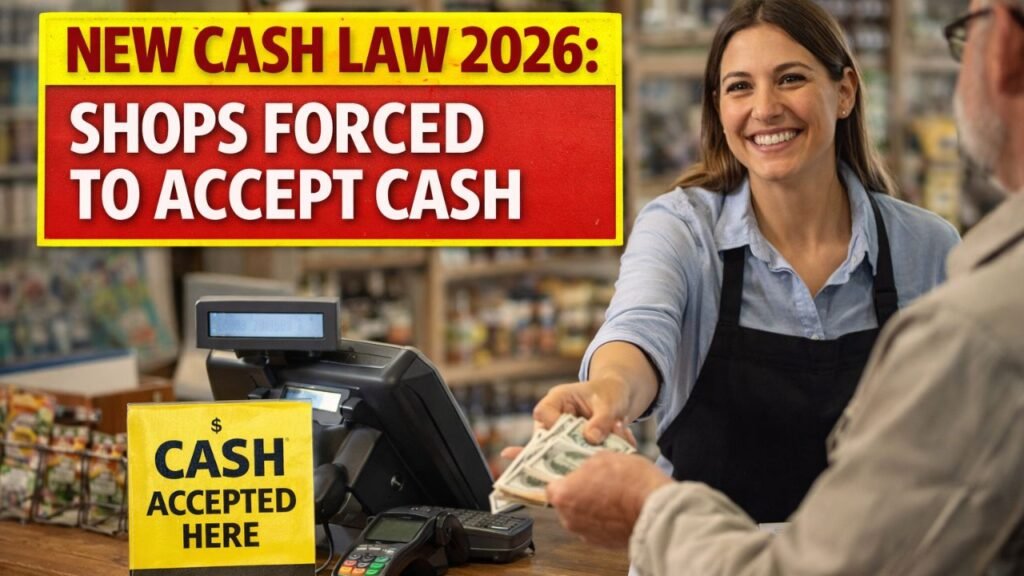
For years, the global shift toward digital payments has transformed how people shop, pay bills, and manage daily finances. Contactless cards, mobile wallets, and instant transfers have become the norm, making transactions faster and more convenient than ever before. Yet, as the world moves closer to becoming cashless, concerns about accessibility and financial inclusion have grown.
In response, a significant regulatory change set for 2026 will require many businesses to accept cash for essential purchases. The new cash acceptance law is designed to ensure that physical currency remains a reliable payment option, particularly for essential goods and services. While digital payments will continue to dominate, this reform signals a renewed commitment to choice, accessibility, and financial resilience.
Why Mandatory Cash Acceptance Is Being Introduced

The introduction of mandatory cash acceptance reflects a growing recognition that not everyone can rely exclusively on digital payment systems. While technology has simplified commerce, it has also created barriers for certain groups.
Protecting Financial Inclusion
One of the primary goals of the new law is to prevent financial exclusion. Not all consumers have access to digital banking tools or reliable internet connections. For some individuals, cash remains the most practical and secure way to manage daily expenses.
Mandatory cash acceptance ensures that people who depend on physical money can continue to purchase essential goods without facing limitations.
Maintaining Economic Resilience

Digital systems, while efficient, are not immune to disruptions. Network outages, cyber incidents, or technical failures can temporarily halt card payments and mobile transactions. In such situations, cash serves as a dependable backup method.
By preserving cash acceptance in key sectors, the new regulation strengthens overall payment system resilience.
Supporting Consumer Choice
Consumers increasingly expect flexibility in how they pay. While many prefer digital convenience, others value the control and privacy associated with cash. The new law reinforces the principle that consumers should not be forced into a single payment method.
What Businesses Will Be Required to Do

The 2026 regulation introduces clear responsibilities for businesses operating in essential service sectors. These industries play a vital role in everyday living, making reliable payment access crucial.
Essential Sectors Covered
Businesses expected to accept cash include those providing:
Groceries and everyday household supplies
Fuel and transportation services
Healthcare and pharmacy services
Public transport and essential mobility services
These sectors are considered fundamental to daily life, meaning consumers must always have access to payment options regardless of their technological capabilities.
Restrictions on Card-Only Policies
Before the reform, many businesses adopted card-only policies to streamline operations and reduce cash-handling risks. Under the new law, such policies will be limited in essential sectors.
Businesses may still accept digital payments, but they will no longer be allowed to refuse cash when providing critical services.
Possible Exemptions
Not every business will be affected equally. Smaller operations or those operating in low-risk categories may receive exemptions under specific conditions.
These exemptions aim to balance practicality with fairness, ensuring that compliance does not place an excessive burden on small enterprises.
How the Law Will Affect Daily Spending Habits
For consumers, the most noticeable impact will be the increased ability to use cash in places where it was previously refused.
Greater Payment Flexibility
Shoppers will experience greater freedom in choosing how they pay. Whether using notes, coins, cards, or mobile devices, consumers will have more control over their financial interactions.
This flexibility enhances convenience, particularly during unexpected situations such as system outages or lost payment cards.
Reduced Payment Barriers
In recent years, some consumers encountered frustration when businesses refused cash payments. The new regulation eliminates many of these barriers in essential sectors.
This ensures that everyday transactions—such as purchasing groceries or paying for transport—remain accessible to everyone.
Continued Growth of Digital Payments
Despite the renewed emphasis on cash acceptance, digital payment technologies will continue to expand. Contactless payments, biometric authentication, and mobile wallets will remain widely used.
The reform does not discourage digital innovation; instead, it creates a hybrid payment ecosystem where both methods coexist.
Benefits for Vulnerable and Underserved Groups
While the law affects the broader population, certain groups stand to benefit significantly from mandatory cash acceptance.
Older Adults and Traditional Cash Users
Many older individuals prefer cash due to familiarity and ease of budgeting. Physical currency provides a tangible sense of spending limits and financial control.
Mandatory acceptance ensures that these consumers can continue managing their finances in ways that feel comfortable and secure.
Rural and Remote Communities
In regions where digital infrastructure is limited, reliance on cash remains common. Internet disruptions or weak connectivity can make digital payments unreliable.
Cash acceptance ensures continuity of essential services in areas where technological systems may not always function smoothly.
Individuals Without Banking Access
Not everyone has access to formal banking systems. For individuals who rely on cash-based income or budgeting, digital-only payment environments can create obstacles.
The new regulation ensures that essential services remain accessible regardless of banking status.
Operational Considerations for Businesses
While consumers may benefit from increased payment flexibility, businesses must adapt to new operational requirements.
Cash Handling and Security Measures
Businesses accepting cash must implement secure handling processes. This includes managing cash storage, ensuring accurate accounting, and reducing theft risks.
Investing in secure systems and staff training can help businesses maintain efficiency while complying with new regulations.
Adjusting Payment Infrastructure
Businesses that previously operated as card-only will need to reintroduce cash acceptance systems. This may involve installing cash registers, safes, and reconciliation processes.
Early preparation will help minimize disruption and ensure a smooth transition.
Managing Administrative Costs
Handling cash involves operational costs such as transportation, counting, and reconciliation. Businesses may need to review workflows to maintain efficiency while meeting regulatory requirements.
However, maintaining multiple payment options can also increase customer satisfaction and loyalty.
The Role of Technology in a Hybrid Payment Future
The future of payments is unlikely to be exclusively digital or entirely cash-based. Instead, a hybrid model combining both systems is emerging.
Integration of Smart Payment Systems
Modern point-of-sale systems are designed to handle multiple payment methods seamlessly. Businesses can integrate cash, card, and digital payment options into unified platforms.
This reduces administrative complexity while offering customers greater flexibility.
Enhancing Payment Security
Digital payments continue to evolve with improved security features such as encryption, biometric verification, and tokenization. Meanwhile, cash transactions remain secure through traditional verification methods.
Together, these approaches create a diversified and resilient payment landscape.
Long-Term Economic and Social Implications
Mandatory cash acceptance is more than a short-term policy change. It reflects a broader shift toward balanced financial ecosystems that prioritize accessibility alongside innovation.
Strengthening Consumer Confidence
Knowing that essential services will always accept cash provides reassurance during uncertain times. This confidence supports stable consumer spending patterns.
Encouraging Responsible Innovation
Rather than limiting technological progress, the law encourages innovation that includes all users. Payment systems must evolve in ways that support accessibility and resilience.
Preserving Monetary Choice
Cash remains a trusted form of payment worldwide. Maintaining its availability ensures that individuals retain control over how they manage their finances.
Preparing for the 2026 Cash Acceptance Era
As the implementation timeline approaches, both consumers and businesses can take proactive steps to prepare.
Consumers may benefit from keeping small amounts of cash available for essential purchases. Monitoring updates and understanding rights related to payment methods will also be valuable.
Businesses, meanwhile, should begin reviewing their payment systems and operational processes. Early adaptation reduces compliance risks and enhances customer trust.
Final Thoughts
The New Cash Law 2026 represents a significant milestone in modern payment policy. By requiring essential businesses to accept cash, regulators aim to protect accessibility, strengthen financial resilience, and preserve consumer choice.
In an era defined by rapid technological advancement, the continued presence of cash offers balance. It ensures that progress does not come at the cost of inclusion, allowing societies to embrace innovation while safeguarding fairness in everyday transactions.