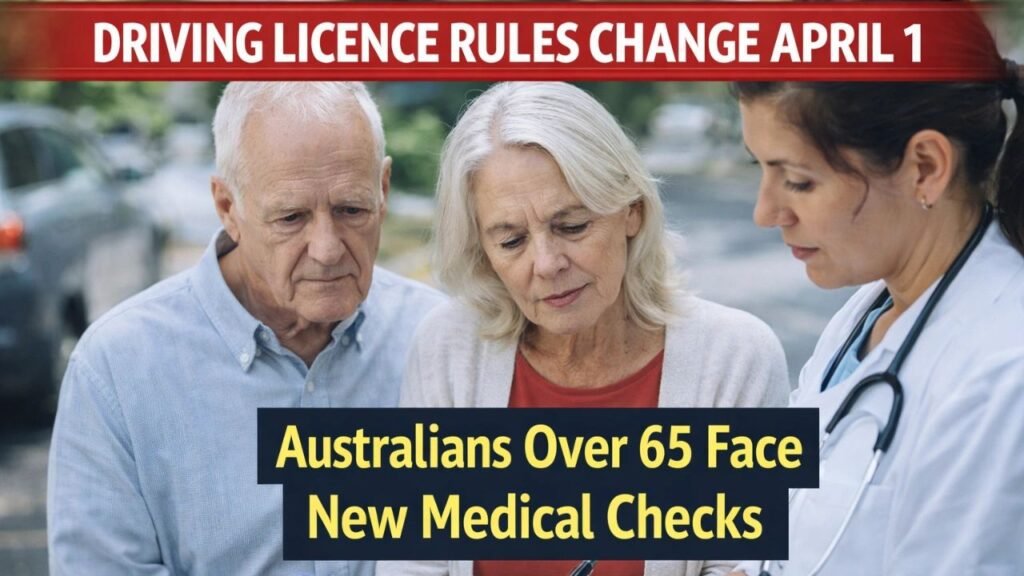
For many Australians, driving represents independence, convenience, and mobility. From grocery runs to medical appointments and social visits, it is an essential part of daily life. Starting April 1, 2026, drivers aged 65 and over will face new medical assessment requirements as part of the licence renewal process. This policy shift is designed to enhance road safety while helping older drivers remain confident and capable behind the wheel.
What’s Changing From April 1, 2026?
The updated regulations introduce structured health assessments for all drivers aged 65 and above. Key aspects of the new rules include:
- Mandatory medical checks starting at 65 during licence renewals or reviews
- Assessment focus areas:
- Vision and eyesight
- Cognitive awareness and reaction time
- Physical ability, including mobility and coordination
- Possible outcomes: full licence renewal, restricted licence, or suspension in serious cases
- National alignment of rules, while implementation occurs at the state level

The goal is to create a consistent framework that balances independence with safety on Australia’s roads.
How the Medical Check Process Works
Drivers aged 65+ will need to follow a clear process to renew or maintain their licence:
- Book a medical appointment with a certified GP.
- Undergo assessments, including:
- Eye examination
- Cognitive screening (memory, reaction, decision-making)
- Physical mobility and coordination evaluation
- Submit a medical report to the licensing authority.
- Await the outcome, which may include:
- Approval for a full licence
- Conditional or restricted licence
- Request for further review or additional testing (e.g., practical driving assessment)
This structured approach ensures authorities can make informed decisions regarding a driver’s safety on the road.
Comparison: Before vs After April 2026
| Criteria | Before April 2026 | From April 1, 2026 |
|---|---|---|
| Age for Medical Checks | Typically 70+ | Starts at 65 |
| Health Monitoring | Limited | Structured and expanded |
| Renewal Requirements | Basic in some states | Medical-based assessment mandatory |
| Licence Restrictions | Less common | More widely applied |
| National Consistency | Varies by state | More aligned framework |

The lowering of the starting age from 70 to 65 increases the number of drivers affected, while ensuring safer roads for all users.
What Drivers Should Know
1. Starting Age Has Been Lowered
Medical checks will now apply from age 65, expanding the scope of regulated drivers.
2. Most Drivers Will Continue to Qualify
Passing standard health checks allows continued driving without restrictions.
3. Restrictions May Be Imposed

Drivers with minor health concerns may receive conditional licences with limitations such as:
- Daytime driving only
- Limited distance or regional travel
- Prohibition from highway driving
4. Increased Monitoring Over Time
As drivers age, especially after 75, assessments may become more frequent to ensure ongoing capability.
5. Costs May Apply
Medical evaluations are usually paid privately, with costs varying by provider and assessment type.
Practical Steps to Prepare
To ensure a smooth renewal process, older drivers should:
- Schedule regular health check-ups
- Keep vision prescriptions current
- Manage chronic conditions proactively (e.g., diabetes, heart health)
- Maintain physical activity to support coordination and mobility
- Keep all documentation ready for medical reviews
- Check state transport authority guidelines for precise rules and deadlines
Being proactive can prevent delays, reduce stress, and help maintain driving independence.
Common Concerns Among Drivers
Many seniors express anxiety about:
- Losing independence due to medical assessments
- Passing medical tests
- Confusion over state-specific implementation
- Potential costs associated with assessments
Understanding the process in advance and taking practical preparatory steps can alleviate these concerns.
Q&A: Driving Licence Medical Rules Australia 2026
- Who is affected by the new rule? Drivers aged 65 and above.
- When does it start? April 1, 2026.
- Are medical checks mandatory? Yes, during licence renewal or review.
- What tests are included? Vision, cognitive ability, and physical fitness.
- Can I still drive after 65? Yes, if medical requirements are met.
- What happens if I fail the test? You may receive restrictions or, in severe cases, lose your licence.
- Will a driving test be required? Only if additional assessments indicate a need.
- Are rules consistent nationwide? Mostly, though minor state variations exist.
- How often will testing be required? Frequency increases with age and medical concerns.
- Is there a cost for medical tests? Yes, fees vary by provider.
- Can I appeal a decision? Most states allow reassessment.
- What is a restricted licence? A licence with conditions on when or how you can drive.
- Do commercial drivers face the same rules? Often stricter standards apply.
- Can family raise safety concerns? Yes, some states allow reporting of concerns.
- How can I best prepare? Maintain good health and stay informed about state requirements.
Final Thoughts
From April 1, 2026, driving licence rules for Australians over 65 will change significantly, introducing medical assessments as a standard part of licence renewal. While most drivers will continue to drive safely, awareness and preparation are key. Regular health monitoring, physical activity, and understanding the new procedures will ensure seniors maintain independence while enhancing road safety for all Australians.